1993. Olympique de Marseille beat AC Milan in the Champions League final; Manchester United win their first league title in twenty-six years; Kevin Keegan’s swashbuckling Newcastle United side are promoted to the Premier League; south of the Tyne, close to the streets where ex-Marseille and Newcastle winger Chris Waddle first kicked a ball around, Rob Houghton starts an under-12 football team called Leam Rangers Youth Club.
What happened next was a labour of love. As the club grew, Houghton leased a derelict plot of land from Gateshead Council, levelled a pitch and found some steel containers to use as changing rooms. When the players needed better facilities, he took a bricklaying course and helped to build them himself. Without external funding, volunteers trained the players, washed the kits, put up the goalposts and marked out the pitch. Cash from the Football Foundation enabled a proper clubhouse to be built, the club expanded to more than twenty-five teams, gained an FA Charter Standard award and helped produce Danny Graham, a £3.5 million signing for Swansea City this summer, and Christie Elliott, who recently moved from Whitley Bay to Partick Thistle. In 2009 a senior men’s team, Gateshead Leam Rangers, was formed, playing against the likes of Wheatley Hill Working Men’s Club, Brandon British Legion and Durham Garden House in the Durham Alliance League. After finishing sixth last season they successfully applied for membership of the Wearside League, one promotion away from the oldest grassroots football league in the world.
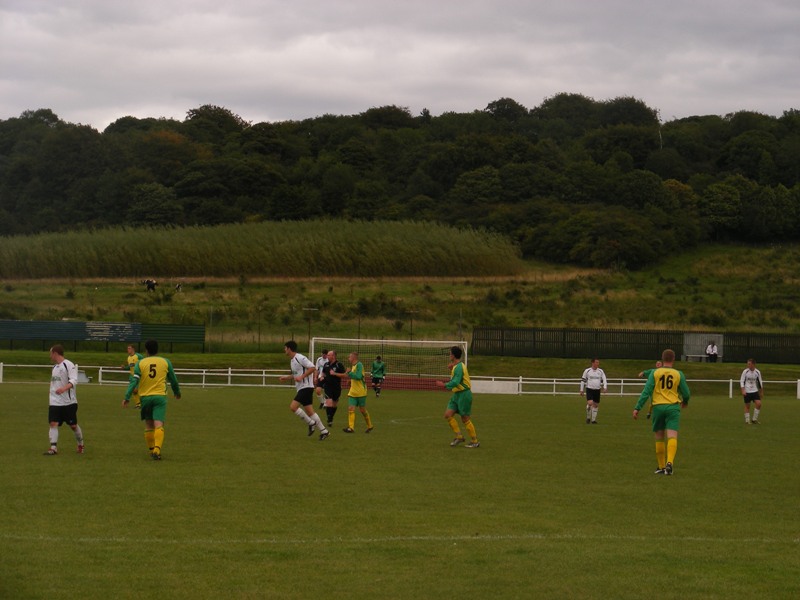
I’ve already seen Rangers play this season, their 1-0 win at Coxhoe Athletic one of three so far in the league. The visitors to the Hilltop Playing Fields are Peterlee Town, a one-time Northern League club and newcomers to the Wearside League themselves after five seasons in the Northern Alliance. Climbing the hill from Heworth Golf Club, there’s a Leam Rangers sign on the perimeter fence and the club’s name written across the metal entrance gates. Houghton collects the £2 entry as we pull into the car park. The pitch is railed off with hard standing newly laid along both sides and overhead power lines along the touchline nearest the clubhouse bar.
Non-League Day attracts a crowd of forty people, including several who’ve made the journey from Peterlee. The game’s played at a brisk pace and both sides have their chances before David Laight runs on to a bouncing ball in the twenty-fifth minute, sidefooting past keeper Dean Saunders to give the visitors the lead. The second goal comes five minutes before half time, a shot ricocheting around the goalmouth before Laight toes home at the second attempt as Saunders tries to get his hands on the ball.
The second half is every bit as eventful. Lee Turnbull – who’d earlier clipped the top of crossbar – smashes a penalty into the roof of the net on forty-seven minutes and the home side clatter the woodwork soon after. A players from each side is sent off, Saunders saves two penalties – the second denying Laight his hat-trick – a Rangers player is taken to hospital with a shoulder injury and Peterlee score a late third goal, their number seven breaking upfield and passing the ball into the corner of the net. At the final whistle the Rangers team untie the nets, collect up the corner flags and carry the goalposts back to the storage hut that Houghton helped build. It's an image which sums up a hugely impressive football club.
Admission: £2
Date: September 3rd 2011
Saturday, 3 September 2011
Thursday, 1 September 2011
Ground 185: Rheydt Avenue, Wallsend Boys Club
“There have been many examples of what Wallsend Boys Club has done not just for Newcastle but also for football in general and the England team. It really sets the standards at a young age and you are prepared for the rest of your career and life,” Steve Watson, England Under 21 international and Premier League runner up with Newcastle United.
What has Wallsend Boys Club given to the game? More than sixty professional players, two current managers and Alex Ferguson’s goalkeeping coach, one Champions League, a Cup Winners’ Cup, 14 league titles in England and Scotland, 145 caps and five of the last six England World Cup squads. “A local charity youth club with a history of producing talented football players,” its website modestly proclaims. The club’s origins are thought to go back to the early years of the 20th century, though it was formally founded in 1938 by the directors of the famous Swan Hunters Shipyard, who wanted to provide a sporting outlet for the energies of their young apprentice workers. “The objects of The Club are to help and educate members through leisure activities, to develop their physical, mental and spiritual capacity in order to help them become useful and responsible members of society,” as the constitution states to this day.
It was shipyard workers who provided the first clubhouse, a corrugated iron shed built on Station Road in 1903. The latest building, in nearby Rheydt Avenue, was paid for by a Football Foundation grant and local fundraising events, including an Annual Dinner which Alan Shearer, Peter Beardsley and Steve Bruce still regularly attend. Shearer donated £15,000 from his testimonial funds to the club and Michael Carrick’s dad serves on its committee. “I started going there when I was five on a Saturday night,” the Manchester United midfielder recalled. “It was the focal point of the community. It was the gathering place for my mates and me and a great place to play five-a-side. The quality of coaching when we played was always excellent despite the fact they were mainly volunteers. Their expertise helped bring me along and develop my skills." “The attitude and conduct demanded,” explained ex-Burnley player Jeff Tate, “not only made you a more complete, competitive footballer on the pitch but a better, more rounded personality off it”.
Wallsend’s senior team play in the Northern Alliance Division Two, where opposing sides include both Bedlington and Alnwick Reserves, Whickham Lang Jacks and Harton and Westoe Colliery Welfare. Harton were previously known as Simonside Sporting Club. After stepping up from the Durham Alliance, they finished third last season and are still unbeaten this time round.
“It’s about how we approach the game,” the Wallsend coach tells his team before the start. “These are a decent side and we’ve got to be on our toes.” There are training sessions on the other seven pitches, though the main one stays empty while everyone waits for the car bringing Harton’s kit. “He’s gone to the wrong post code,” one of the officials explains.
When they do come out, the visiting team – whose squad includes players from the recently folded first division side Shields United – are visibly older than the young Wallsend side, and it’s little surprise when they take the lead, a 40-yard lob catching teenage keeper Sam Guthrie off his line. The home side equalise four minutes later, a miskick dropping fortuitously for the unmarked centre forward, and Guthrie makes a double save with his face to keep the scores level at half time.
In deepening gloom, the second half is a manic, ill-tempered affair, not helped by some heavy tackles and the Harton official’s unique interpretation of the offside law: if the ball goes towards an opposition forward, the linesman shall immediately raise his flag. Wallsend take an early lead, their two front players combining well, but Harton level the scores soon after and edge in front when a free kick plummets onto an unmarked head in the area. As darkness and midge clouds descend on our heads, Wallsend bring the scores level and then go 4-3 ahead, the two forwards breaking the offside trap as the slower Harton defence play an unwisely high line. With nine minutes left to play, the visitors equalise again, their centre forward groping towards the ball and heading in on his knees. Three minutes later it’s 5-4, a Harton midfielder touching the ball past the onrushing keeper and outpacing two defenders to slot into the corner of the net. Immeasurably more entertaining than deadline day on Sky Sports News; “That was undoubtedly the craziest game I’ve ever reffed,” Paul Mosley tweets after full time.
Admission: Free
Date: August 31st 2011
What has Wallsend Boys Club given to the game? More than sixty professional players, two current managers and Alex Ferguson’s goalkeeping coach, one Champions League, a Cup Winners’ Cup, 14 league titles in England and Scotland, 145 caps and five of the last six England World Cup squads. “A local charity youth club with a history of producing talented football players,” its website modestly proclaims. The club’s origins are thought to go back to the early years of the 20th century, though it was formally founded in 1938 by the directors of the famous Swan Hunters Shipyard, who wanted to provide a sporting outlet for the energies of their young apprentice workers. “The objects of The Club are to help and educate members through leisure activities, to develop their physical, mental and spiritual capacity in order to help them become useful and responsible members of society,” as the constitution states to this day.
It was shipyard workers who provided the first clubhouse, a corrugated iron shed built on Station Road in 1903. The latest building, in nearby Rheydt Avenue, was paid for by a Football Foundation grant and local fundraising events, including an Annual Dinner which Alan Shearer, Peter Beardsley and Steve Bruce still regularly attend. Shearer donated £15,000 from his testimonial funds to the club and Michael Carrick’s dad serves on its committee. “I started going there when I was five on a Saturday night,” the Manchester United midfielder recalled. “It was the focal point of the community. It was the gathering place for my mates and me and a great place to play five-a-side. The quality of coaching when we played was always excellent despite the fact they were mainly volunteers. Their expertise helped bring me along and develop my skills." “The attitude and conduct demanded,” explained ex-Burnley player Jeff Tate, “not only made you a more complete, competitive footballer on the pitch but a better, more rounded personality off it”.
Wallsend’s senior team play in the Northern Alliance Division Two, where opposing sides include both Bedlington and Alnwick Reserves, Whickham Lang Jacks and Harton and Westoe Colliery Welfare. Harton were previously known as Simonside Sporting Club. After stepping up from the Durham Alliance, they finished third last season and are still unbeaten this time round.
“It’s about how we approach the game,” the Wallsend coach tells his team before the start. “These are a decent side and we’ve got to be on our toes.” There are training sessions on the other seven pitches, though the main one stays empty while everyone waits for the car bringing Harton’s kit. “He’s gone to the wrong post code,” one of the officials explains.
When they do come out, the visiting team – whose squad includes players from the recently folded first division side Shields United – are visibly older than the young Wallsend side, and it’s little surprise when they take the lead, a 40-yard lob catching teenage keeper Sam Guthrie off his line. The home side equalise four minutes later, a miskick dropping fortuitously for the unmarked centre forward, and Guthrie makes a double save with his face to keep the scores level at half time.
In deepening gloom, the second half is a manic, ill-tempered affair, not helped by some heavy tackles and the Harton official’s unique interpretation of the offside law: if the ball goes towards an opposition forward, the linesman shall immediately raise his flag. Wallsend take an early lead, their two front players combining well, but Harton level the scores soon after and edge in front when a free kick plummets onto an unmarked head in the area. As darkness and midge clouds descend on our heads, Wallsend bring the scores level and then go 4-3 ahead, the two forwards breaking the offside trap as the slower Harton defence play an unwisely high line. With nine minutes left to play, the visitors equalise again, their centre forward groping towards the ball and heading in on his knees. Three minutes later it’s 5-4, a Harton midfielder touching the ball past the onrushing keeper and outpacing two defenders to slot into the corner of the net. Immeasurably more entertaining than deadline day on Sky Sports News; “That was undoubtedly the craziest game I’ve ever reffed,” Paul Mosley tweets after full time.
Admission: Free
Date: August 31st 2011
Wednesday, 31 August 2011
Ground 184: Chester Moor Park, Chester-le-Street Town
Place of the horse people, the Celts called Chester-le-Street. When the Romans arrived they kept the name and added a road, passing close to the fort of Concangis on its way from the Humber to the Tyne. The Anglo-Saxons knew the town as Conceastre, which turned into Chester and finally le-Street, probably around the same time that the first game of football was played in the town – the Upstreeters versus the Downstreeters every Shrove Tuesday, two hundred a side, five hours a match, and the winners decided by the position of the ball come 6pm. Miner’s son Colin Todd, a Brian Clough protégé who won two league titles and 27 England caps, was born in the town sixteen years after the last Shrovetide game was played, and future Manchester United and England captain Bryan Robson followed nine years later. What Chester-le-Street didn’t have was a football team of its own.
In 1972 Colin Todd won the First Division championship with Derby County, Bryan Robson signed professional forms with West Bromwich Albion and Chester-le-Street Garden Farm, founded in a pub and playing on a pitch in Low Fell, kicked off their first season in the Newcastle City Amateur League. Todd picked up a second title and the PFA Players’ Player of the Year award in 1975, the year Garden Farm switched to the Washington League. Three years later, Bryan Robson played in all but one of West Bromwich Albion’s 42 league games, Chester-le-Street changed their name to Town and moved up to the Wearside League.
Town won the title in the year Robson moved to Manchester United, finished third and then second before their ground passed muster for the Northern League. In 1983-84 they won the division two title at the first attempt and joined Blyth Spartans, Whitby Town and Gretna in the top flight. Three times relegated and twice promoted, they spent twelve seasons in Division One before going down in 2010, Nathan Fisher’s 41 goals earning him a £3,000 move and a professional contract at Gateshead. He’s not the only ex-Cestrian to make the step up. Swansea City’s Danny Graham, Blackpool’s Chris Basham, young St Mirren keeper Adam McHugh and Kris Thackray, who’s turned out for five teams in Italy since leaving Newcastle United in 2008, are all graduates of Chester-le-Street Town Juniors. Set up in 1995, 61 players have moved from the Juniors to Town’s senior side, including members of the team which knocked Port Vale, Hartlepool and Derby County out of the 2004 FA Youth Cup on their way to a 2-0 fourth round defeat at West Ham United.
The Cestrians ended last season – their first in Division Two since 1998 – in eighth place, a massive twenty-three points off promotion. After ten years in charge, Stuart Sherwood stepped down in the close season, the club appointing Grant Crookes – Emmerdale extra, ex-Darlington and Hartlepool professional and West Allotment Celtic assistant manager – in his place. Unsurprisingly, Cookes’ hopes for this season rest on youth products such as centre forward Callum Patton and 19-year-old ex-Durham County midfielder Jonathan Evans. Birtley, thirteenth last year, suffered home defeats in their opening two games before beating Brandon and Northallerton Town by three goal margins. With one of the smallest budgets in the division, Scott Oliver has had to contend with a constantly changing squad, midfielder Andrew Barclay the latest to leave, this time for first division South Shields.
Chester-le-Street spent upwards of £100,000 bringing Moor Park up to Northern League standards. The results are still visible in the paved terracing behind one goal and the covered, all-seater stand with a glass box set aside optimistically for press. A PA splutters into life as the teams walk out of the tunnel.
Birtley have the bulk of the early possession, but with the grass long and the bounce more uneven than a fifth day Test wicket the sides struggle to keep hold of the ball long enough to threaten either goal. Chester test keeper Lenny French a couple of times, force a scrambled clearance and are just inches away from scoring when James Baxter slides wide from a Patton pull back. At the other end, Steven Telford and Dan Smart toil without reward, Birtley’s midfield leaving too much space front and behind, and Town keeper Kyle Barlow as much a spectator as those queuing for food at the Northern League’s number one burger van.
Things change dramatically soon after half-time. Telford opens the scoring with his team’s first on target effort, following up a shot which comes back off the post. Before Crookes or his layers can react, Andy McIntosh slams in a rebound from a blocked free kick. Smart goes close to extending the lead – dragging a shot across goal and failing to lob Barlow from the edge of the box – before Sam Renwick coverts a Baxter cross with a backheel flick at the near post. Chester-le-Street push three men up front, but their two best chances are squandered in injury time and Birtley hold on for their third win in a row.
Admission: £5
Date: August 30th 2011
In 1972 Colin Todd won the First Division championship with Derby County, Bryan Robson signed professional forms with West Bromwich Albion and Chester-le-Street Garden Farm, founded in a pub and playing on a pitch in Low Fell, kicked off their first season in the Newcastle City Amateur League. Todd picked up a second title and the PFA Players’ Player of the Year award in 1975, the year Garden Farm switched to the Washington League. Three years later, Bryan Robson played in all but one of West Bromwich Albion’s 42 league games, Chester-le-Street changed their name to Town and moved up to the Wearside League.
Town won the title in the year Robson moved to Manchester United, finished third and then second before their ground passed muster for the Northern League. In 1983-84 they won the division two title at the first attempt and joined Blyth Spartans, Whitby Town and Gretna in the top flight. Three times relegated and twice promoted, they spent twelve seasons in Division One before going down in 2010, Nathan Fisher’s 41 goals earning him a £3,000 move and a professional contract at Gateshead. He’s not the only ex-Cestrian to make the step up. Swansea City’s Danny Graham, Blackpool’s Chris Basham, young St Mirren keeper Adam McHugh and Kris Thackray, who’s turned out for five teams in Italy since leaving Newcastle United in 2008, are all graduates of Chester-le-Street Town Juniors. Set up in 1995, 61 players have moved from the Juniors to Town’s senior side, including members of the team which knocked Port Vale, Hartlepool and Derby County out of the 2004 FA Youth Cup on their way to a 2-0 fourth round defeat at West Ham United.
The Cestrians ended last season – their first in Division Two since 1998 – in eighth place, a massive twenty-three points off promotion. After ten years in charge, Stuart Sherwood stepped down in the close season, the club appointing Grant Crookes – Emmerdale extra, ex-Darlington and Hartlepool professional and West Allotment Celtic assistant manager – in his place. Unsurprisingly, Cookes’ hopes for this season rest on youth products such as centre forward Callum Patton and 19-year-old ex-Durham County midfielder Jonathan Evans. Birtley, thirteenth last year, suffered home defeats in their opening two games before beating Brandon and Northallerton Town by three goal margins. With one of the smallest budgets in the division, Scott Oliver has had to contend with a constantly changing squad, midfielder Andrew Barclay the latest to leave, this time for first division South Shields.
Chester-le-Street spent upwards of £100,000 bringing Moor Park up to Northern League standards. The results are still visible in the paved terracing behind one goal and the covered, all-seater stand with a glass box set aside optimistically for press. A PA splutters into life as the teams walk out of the tunnel.
Birtley have the bulk of the early possession, but with the grass long and the bounce more uneven than a fifth day Test wicket the sides struggle to keep hold of the ball long enough to threaten either goal. Chester test keeper Lenny French a couple of times, force a scrambled clearance and are just inches away from scoring when James Baxter slides wide from a Patton pull back. At the other end, Steven Telford and Dan Smart toil without reward, Birtley’s midfield leaving too much space front and behind, and Town keeper Kyle Barlow as much a spectator as those queuing for food at the Northern League’s number one burger van.
Things change dramatically soon after half-time. Telford opens the scoring with his team’s first on target effort, following up a shot which comes back off the post. Before Crookes or his layers can react, Andy McIntosh slams in a rebound from a blocked free kick. Smart goes close to extending the lead – dragging a shot across goal and failing to lob Barlow from the edge of the box – before Sam Renwick coverts a Baxter cross with a backheel flick at the near post. Chester-le-Street push three men up front, but their two best chances are squandered in injury time and Birtley hold on for their third win in a row.
Admission: £5
Date: August 30th 2011
Saturday, 27 August 2011
Ground 183: Longbenton Sports Ground, Newcastle Chemfica (Ind)
Whickham Lang Jacks, Red House Farm, Harraby Catholic Club and Willington Quay Saints are just some of the odd and obscure club names that populate the three divisions of the Northern Football Alliance. But none stand out like Newcastle Chemfica (Ind), probably the only football club in the world whose name reads like the losing candidate in a council election.
The team’s come a long way since the days when they drew their players from Newcastle University’s School of Chemical Engineering and Advanced Materials and “got regularly humped in the Alliance Division Two,” as local football writer Ian Cusack puts it. Formed by the merger of Benfield Chemfica and Independent FC, Newcastle Chemfica (Independent) Football Club now has six teams spread across Tyneside’s Saturday and Sunday leagues, with Nigel Reeves taking on the Romanov role of chairing the club and picking the starting eleven. The ambitious club train two nights a week and “reliability, commitment, a desire to improve…and an ability to pay your fees” are among the qualities demanded its players. On the heels of a Northumberland Minor Cup semi-final loss to Percy Main in 2010, twenty-two wins, four defeats and forty goals from Steve McLaughlin saw Chemfica streak to last season’s Northern Alliance Division Two title. So far Division One has proved a tougher proposition, Reeves’ first team squad losing all of their first three games before a 2-1 midweek win at Cullercoats.
With Newcastle University’s Cochrane Park pitches about to get a much needed spruce up before the London 2012 football teams start using them next year, Chemfica are playing their home games at the Longbenton Sports Ground this season. A blue rope, held in place by metal posts, is stretched around the touchline, where a crowd of eleven (or twelve if you include Ian Cusack’s bike) has gathered. Chemfica’s reserves – who turn out in the Tyneside Amateur League alongside Heaton Rifles, Diggers United, Blyth Isabella and New York – are already underway on the second pitch, kicking towards the Department of Work and Pensions complex.
Gosforth Bohemians haven’t started much better than Chemfica, winning two and losing two of their opening four games, including a 4-1 loss at Willington in their only away game to date. They go into the match with “probably the youngest side we’ve ever fielded,” according to their chairman Patrick William-Powlett, who’s been involved with the club since the early-1980s. “We’ve got two debutants, two 16 year olds and another two under 20 on the pitch.” Bohs’ inexperience is telling in an error-strewn first half. McLaughlin wears yellow boots and plays inches off the toes of the two centre halves, but his finishing is more Leon Best than Hernan Crespo as he blazes over the crossbar with only Bohemians’ keeper Steve Wilkinson to beat, pulls a shot wide and sees Wilkinson turn another effort around the post after a centre back passes the ball straight to his feet. Bohemians hit the ball long too often, barely mustering a chance of their own. “Play sensibly,” their manager tells them at the break.
Chemfica haven’t drawn a league match since the 2008-09 season and they begin the second half looking the likelier team to score. But then 16-year-old James Lockhead turns smartly on the edge of the box and hits his first ever senior goal under the diving body of keeper Craig Jones. “Fell asleep, didn’t you?” Jones grumbles at his defence. A minute later the keeper clips Lockhead as he tries to palm the ball away from the Gosforth player’s feet. “I never touched him, man,” he tells the indifferent referee. “He sold you a good ‘un there, like. They’re all diving nowadays.” Matty Atkin hits the penalty into the roof of the net. “You got mugged there,” Jones shouts as the teams run back to halfway.
Bohemians are rampant for the next twenty minutes, Jones keeping them out with two excellent saves from 18-year-old forward Andy Renton. Gradually, the home side come back into the game, McLaughlin having a headed goal flagged offside after Wilkinson tips a rising shot over the bar. Chemfica have two goalbound efforts blocked on the line – one bouncing back off the shin of their own players – while Bohemians have two players sent off in the final five minutes, ending the game with nine men on the field as a Chemfica player is carried back to the dressing room in the arms of two substitutes.
Admission: Free
Date: 27th August 2011
The team’s come a long way since the days when they drew their players from Newcastle University’s School of Chemical Engineering and Advanced Materials and “got regularly humped in the Alliance Division Two,” as local football writer Ian Cusack puts it. Formed by the merger of Benfield Chemfica and Independent FC, Newcastle Chemfica (Independent) Football Club now has six teams spread across Tyneside’s Saturday and Sunday leagues, with Nigel Reeves taking on the Romanov role of chairing the club and picking the starting eleven. The ambitious club train two nights a week and “reliability, commitment, a desire to improve…and an ability to pay your fees” are among the qualities demanded its players. On the heels of a Northumberland Minor Cup semi-final loss to Percy Main in 2010, twenty-two wins, four defeats and forty goals from Steve McLaughlin saw Chemfica streak to last season’s Northern Alliance Division Two title. So far Division One has proved a tougher proposition, Reeves’ first team squad losing all of their first three games before a 2-1 midweek win at Cullercoats.
With Newcastle University’s Cochrane Park pitches about to get a much needed spruce up before the London 2012 football teams start using them next year, Chemfica are playing their home games at the Longbenton Sports Ground this season. A blue rope, held in place by metal posts, is stretched around the touchline, where a crowd of eleven (or twelve if you include Ian Cusack’s bike) has gathered. Chemfica’s reserves – who turn out in the Tyneside Amateur League alongside Heaton Rifles, Diggers United, Blyth Isabella and New York – are already underway on the second pitch, kicking towards the Department of Work and Pensions complex.
Gosforth Bohemians haven’t started much better than Chemfica, winning two and losing two of their opening four games, including a 4-1 loss at Willington in their only away game to date. They go into the match with “probably the youngest side we’ve ever fielded,” according to their chairman Patrick William-Powlett, who’s been involved with the club since the early-1980s. “We’ve got two debutants, two 16 year olds and another two under 20 on the pitch.” Bohs’ inexperience is telling in an error-strewn first half. McLaughlin wears yellow boots and plays inches off the toes of the two centre halves, but his finishing is more Leon Best than Hernan Crespo as he blazes over the crossbar with only Bohemians’ keeper Steve Wilkinson to beat, pulls a shot wide and sees Wilkinson turn another effort around the post after a centre back passes the ball straight to his feet. Bohemians hit the ball long too often, barely mustering a chance of their own. “Play sensibly,” their manager tells them at the break.
Chemfica haven’t drawn a league match since the 2008-09 season and they begin the second half looking the likelier team to score. But then 16-year-old James Lockhead turns smartly on the edge of the box and hits his first ever senior goal under the diving body of keeper Craig Jones. “Fell asleep, didn’t you?” Jones grumbles at his defence. A minute later the keeper clips Lockhead as he tries to palm the ball away from the Gosforth player’s feet. “I never touched him, man,” he tells the indifferent referee. “He sold you a good ‘un there, like. They’re all diving nowadays.” Matty Atkin hits the penalty into the roof of the net. “You got mugged there,” Jones shouts as the teams run back to halfway.
Bohemians are rampant for the next twenty minutes, Jones keeping them out with two excellent saves from 18-year-old forward Andy Renton. Gradually, the home side come back into the game, McLaughlin having a headed goal flagged offside after Wilkinson tips a rising shot over the bar. Chemfica have two goalbound efforts blocked on the line – one bouncing back off the shin of their own players – while Bohemians have two players sent off in the final five minutes, ending the game with nine men on the field as a Chemfica player is carried back to the dressing room in the arms of two substitutes.
Admission: Free
Date: 27th August 2011
Thursday, 25 August 2011
Ground 182: Peffermills Playing Fields, Edinburgh University
Founded in 1878, Edinburgh University AFC are the third oldest of the East of Scotland League’s twenty-four member clubs and the most successful University side in the whole country. Awarded the Edinburgh Shield – the world’s third-oldest trophy after the FA and Scottish Cups – in 1883, when Hibernian were unable to raise a team to play in the final, the club lifted its twenty-fifth inter-Scottish Universities League earlier this year and went all the way to the final of the British Universities Championships before losing out to UWE Hartpury.
Full members of the Scottish Football Association, the students reached the third round of the Scottish Cup in 2008, beating Highland League side Deveronvale 3-1 in front of 350 fans at Peffermill Playing Fields before controversially exiting to a last-minute goal at Cove Rangers. Success has been more elusive in the East of Scotland League: since joining in 1926 the University has only the 2002-03 First Division title to its name.
Stepping up from junior football in 1979, when the league they were playing in withered to just six teams, Whitehill Welfare have since lifted a record Premier Division fifteen titles and twelve League Cups. Champions in each of their first four seasons, their most recent success came in 2008 when they pipped University to the title by a single point. Last season only goal difference kept the two apart as they finished fourth and fifth in the league, while an East of Scotland Qualifying Cup meeting earlier this month ended in a goalless draw.
There’s a crowd of around sixty for the opening night of the new league season, including five looking out of a wooden portakabin, the front latched open and a portable cricket scoreboard propped against the side wall. Beset by absence and injury and outmuscled in midfield, University sit deep, hitting balls high and early over the Whitehill defence for their lone forward to chase after. “Referee, they’re slowing the game down,” visiting coach Andy Gray complains. “Could the keeper move any slower? It took him twenty seconds to get the ball back there.” “We’ve only played fifteen minutes,” Douglas Samuel shouts back from the home dugout.
“There’s goals tonight, there’s no danger of that,” a Whitehill fan says between drags on a cigarette. But though his team do everything short of walk the ball into the net they don’t have anyone to finish the approach work. “We innae Barcelona,” Grant Kearney says on the Whitehill bench. “Use your feet, move the ball,” manager Rob Paget shouts. “He can dribble but he can’t shoot. He kicked the ball like a three-year-old there.” When they do get a shot on target they can’t find a way past University keeper Mark Tait, a third year Medicine and Pharmacology student who had “the most outstanding game of his career” the last time the teams met.
At half time I join the queue for the tea hut in the pavilion, where a cup of coffee’s just 50p and the walls are covered in signed shirts, pennants and team photographs. A Newcastle United shirt, autographed by Alan Shearer and presented by a fan, hangs by the entrance to commemorate the club’s Scottish Cup run of 2006 when they knocked out Highland League side Keith before losing 5-1 at Cowdenbeath in the second round.
Whitehill pick up where they left off after the break but the closest they come to a goal are a few long range shots and a dive in the area that only succeeds in winning a yellow card. “We’ve got to change something,” a man in a University training jacket says, "we can't hold out like this." “It’s coming, it’s coming,” shouts a Whitehill voice as a University player blocks a shot with his shin and another careers off his back. In the 87th minute it finally does, trialist Kevin Moffatt striking past Tait after the University defence fail to clear the ball. “About time too,” says a Whitehill fan.
Admission: Admission: £4 (I think). I unintentionally snuck in by walking across the fields from the main entrance and didn’t see the board until half time.
Date: August 24th 2011
Full members of the Scottish Football Association, the students reached the third round of the Scottish Cup in 2008, beating Highland League side Deveronvale 3-1 in front of 350 fans at Peffermill Playing Fields before controversially exiting to a last-minute goal at Cove Rangers. Success has been more elusive in the East of Scotland League: since joining in 1926 the University has only the 2002-03 First Division title to its name.
Stepping up from junior football in 1979, when the league they were playing in withered to just six teams, Whitehill Welfare have since lifted a record Premier Division fifteen titles and twelve League Cups. Champions in each of their first four seasons, their most recent success came in 2008 when they pipped University to the title by a single point. Last season only goal difference kept the two apart as they finished fourth and fifth in the league, while an East of Scotland Qualifying Cup meeting earlier this month ended in a goalless draw.
There’s a crowd of around sixty for the opening night of the new league season, including five looking out of a wooden portakabin, the front latched open and a portable cricket scoreboard propped against the side wall. Beset by absence and injury and outmuscled in midfield, University sit deep, hitting balls high and early over the Whitehill defence for their lone forward to chase after. “Referee, they’re slowing the game down,” visiting coach Andy Gray complains. “Could the keeper move any slower? It took him twenty seconds to get the ball back there.” “We’ve only played fifteen minutes,” Douglas Samuel shouts back from the home dugout.
“There’s goals tonight, there’s no danger of that,” a Whitehill fan says between drags on a cigarette. But though his team do everything short of walk the ball into the net they don’t have anyone to finish the approach work. “We innae Barcelona,” Grant Kearney says on the Whitehill bench. “Use your feet, move the ball,” manager Rob Paget shouts. “He can dribble but he can’t shoot. He kicked the ball like a three-year-old there.” When they do get a shot on target they can’t find a way past University keeper Mark Tait, a third year Medicine and Pharmacology student who had “the most outstanding game of his career” the last time the teams met.
At half time I join the queue for the tea hut in the pavilion, where a cup of coffee’s just 50p and the walls are covered in signed shirts, pennants and team photographs. A Newcastle United shirt, autographed by Alan Shearer and presented by a fan, hangs by the entrance to commemorate the club’s Scottish Cup run of 2006 when they knocked out Highland League side Keith before losing 5-1 at Cowdenbeath in the second round.
Whitehill pick up where they left off after the break but the closest they come to a goal are a few long range shots and a dive in the area that only succeeds in winning a yellow card. “We’ve got to change something,” a man in a University training jacket says, "we can't hold out like this." “It’s coming, it’s coming,” shouts a Whitehill voice as a University player blocks a shot with his shin and another careers off his back. In the 87th minute it finally does, trialist Kevin Moffatt striking past Tait after the University defence fail to clear the ball. “About time too,” says a Whitehill fan.
Admission: Admission: £4 (I think). I unintentionally snuck in by walking across the fields from the main entrance and didn’t see the board until half time.
Date: August 24th 2011
Saturday, 20 August 2011
Ground 181: Beechfield Park, Coxhoe Athletic
“A club where you genuinely feel welcome,” says Chris Daniel about Coxhoe. “They have a quirky ground, a great pitch and stunning views over towards Durham City. All in all it’s everything you could want as a spectator.” “Everything is spotless and lovingly cared for,” 100 Football Grounds Club author Shaun Smith wrote in early 2009. “Immaculately maintained,” Football Grounds in Focus agreed earlier this year. “A visit to Coxhoe comes with my highest recommendation”.
Coxhoe Athletic have been around in one guise or another since the 1950s, carrying on a tradition that began with three clubs - Coxhoe Pottery, Coxhoe Town and Coxhoe St Mary’s – formed in the opening decade of the 20th century. After taking over the running of the Steetley Lime Company football team in the 1970s, the village team won the Auckland League Division Two Cup in 1978 and eventually progressed from the Auckland and District League to the Durham Alliance under the astute management of Gary Forrest. Forrest led Coxhoe to five cup finals in a single season, won the Alliance title in 2003 and 2004 and saw his team score a hundred goals in thirty-six games as, newly promoted to the Wearside League, they finished fourth behind future Northern League sides Darlington RA, Birtley Town and Stokesley Sporting Club.
In the summer of 2005 Forrest left for the Northern League himself, replacing Kenny Lindoe at struggling Shildon. Stripped of their manager and fifteen players – including ex-Scarborough forward Wayne Gredziak and defender Rob Bowman, an FA Youth Cup winner with Leeds who played in the same England U18 squad as Paul Scholes, Gary Neville, Robbie Fowler and Sol Campbell - the club’s progress understandably stalled. Last season Coxhoe propped up the league, winning only five games and conceding a hundred and three goals. A brighter start to 2011-12 has seen them draw with Willington and beat league newcomers Silksworth Rangers after an opening day defeat at Redcar, leaving them ninth in the table as the game kicks off.
Beechfield Park more than lives up to its billing, freshly painted with neatly clipped grass and a playing surface that is absolutely pristine. The two come out through a gap between a concrete terrace and the main stand, just one of several distinctive, covered structures that are dotted around the pitch. Like Silksworth, the visiting Gateshead Leam Rangers side are in their first season in a step seven league, winning one and losing two of their first three games.
Both sides begin warily, neither having enough movement to pose any threat. With the midfield congested all the two goalkeepers have to worry about are a few overhit passes and the occasional trundled effort at goal. Rangers stab two shots wide after crossfield balls expose the static home defence, finding their range with a diagonal pass which Coxhoe keeper Carl Robinson does well to block only to see Robert Allen sweep a follow up shot past the covering defender. “We’re making everything hard for ourselves,” complains the home skipper Trevor Tearney. “Get the ball down and move.” But despite Coxhoe’s efforts to find an equaliser it’s Rangers who go closest to scoring again, Robinson misjudging a bouncing ball and a header slamming against the outside of the post.
It’s the closest either side comes to a second goal. Despite playing with three up front from midway through the second half, the best the home side can manage is a tame header from a free kick, their over eagerness to get the ball forward meaning they rarely find a player in white. With keeper Dean Saunders commanding his area and Stephen Robinson outstanding at right back, Rangers are largely untroubled by the bustling home attack. Although they never stop battling, Coxhoe run out of ideas before they finally run out of time.
Entrance: £2
Date: 20th August 2011
Coxhoe Athletic have been around in one guise or another since the 1950s, carrying on a tradition that began with three clubs - Coxhoe Pottery, Coxhoe Town and Coxhoe St Mary’s – formed in the opening decade of the 20th century. After taking over the running of the Steetley Lime Company football team in the 1970s, the village team won the Auckland League Division Two Cup in 1978 and eventually progressed from the Auckland and District League to the Durham Alliance under the astute management of Gary Forrest. Forrest led Coxhoe to five cup finals in a single season, won the Alliance title in 2003 and 2004 and saw his team score a hundred goals in thirty-six games as, newly promoted to the Wearside League, they finished fourth behind future Northern League sides Darlington RA, Birtley Town and Stokesley Sporting Club.
In the summer of 2005 Forrest left for the Northern League himself, replacing Kenny Lindoe at struggling Shildon. Stripped of their manager and fifteen players – including ex-Scarborough forward Wayne Gredziak and defender Rob Bowman, an FA Youth Cup winner with Leeds who played in the same England U18 squad as Paul Scholes, Gary Neville, Robbie Fowler and Sol Campbell - the club’s progress understandably stalled. Last season Coxhoe propped up the league, winning only five games and conceding a hundred and three goals. A brighter start to 2011-12 has seen them draw with Willington and beat league newcomers Silksworth Rangers after an opening day defeat at Redcar, leaving them ninth in the table as the game kicks off.
Beechfield Park more than lives up to its billing, freshly painted with neatly clipped grass and a playing surface that is absolutely pristine. The two come out through a gap between a concrete terrace and the main stand, just one of several distinctive, covered structures that are dotted around the pitch. Like Silksworth, the visiting Gateshead Leam Rangers side are in their first season in a step seven league, winning one and losing two of their first three games.
Both sides begin warily, neither having enough movement to pose any threat. With the midfield congested all the two goalkeepers have to worry about are a few overhit passes and the occasional trundled effort at goal. Rangers stab two shots wide after crossfield balls expose the static home defence, finding their range with a diagonal pass which Coxhoe keeper Carl Robinson does well to block only to see Robert Allen sweep a follow up shot past the covering defender. “We’re making everything hard for ourselves,” complains the home skipper Trevor Tearney. “Get the ball down and move.” But despite Coxhoe’s efforts to find an equaliser it’s Rangers who go closest to scoring again, Robinson misjudging a bouncing ball and a header slamming against the outside of the post.
It’s the closest either side comes to a second goal. Despite playing with three up front from midway through the second half, the best the home side can manage is a tame header from a free kick, their over eagerness to get the ball forward meaning they rarely find a player in white. With keeper Dean Saunders commanding his area and Stephen Robinson outstanding at right back, Rangers are largely untroubled by the bustling home attack. Although they never stop battling, Coxhoe run out of ideas before they finally run out of time.
Entrance: £2
Date: 20th August 2011
Thursday, 18 August 2011
Ground 180: Ponteland Leisure Centre, Ponteland United
A couple of miles north of Newcastle Airport, Ponteland's the kind of place where people still clip their hedges and spread gravel on their drives. There's a sign for the cricket club's game with Greenfield at the entrance to the Leisure Centre, a stone bridge over a gently burbling river on the opposite side of the road, and two women discussing hollyhocks in a garden next door. You couldn't get more ITV detective drama if John Nettles turned up with a murdered vicar and a plate of cucumber sandwiches.
Put the words 'Ponteland' and 'Football' together and the first thing you think of is Darras Hall, a housing estate for the nouveau riche where lottery winners, businessmen and Newcastle United footballers share the same leafy streets. But the town and football go back a lot further than Andy Carroll's bail arrangements, Alan Shearer's golf swing or a burnt out car on Kevin Nolan's drive. Formed in 1900, Ponteland United led a mostly uneventful existence before joining the Northern Alliance in 1983. Under the management of Ken Scott, Paddy Lowery, Barrie Wardrobe and finally Jarrod Suddick, whose father Alan made over 450 appearances for Newcastle United and Blackpool, the club won three Northumberland Senior Benevolent Bowls while narrowly missing out on a sucession of other trophies.
League runners-up twice and ten-time beaten finalists in the Alliance's two major cup competitions, United finally got their hands on the Challenge Cup in 2010 and added their first league title in May, Harry Tulip's winner at home to Blyth Town putting Suddick's team one point clear of Alnwick with just three minutes of the season left to play. With Alnwick now in the Northern League, United started the new campaign by beating Seaton Delaval Amateurs 4-2, Tulip once again scoring the game's final goal. Harraby Catholic Club, third last year and seen by many as the main threat to Ponteland retaining their title, were even more impressive in winning 4-1 away at Heaton Stannington.
Long grass and rusty railings surround the Leisure Centre pitch, the Harraby players out kicking balls through the grass shavings. "This pitch is gonna hold up, no doubt at all," their coach shouts, handing out bibs. "More on the ball. Don't give them an excuse to make the game tight." Harraby line up in a 4-3-3, the coach still giving instructions to his defenders as the captains shake hands. Ponteland walk out silently a minute before the game kicks off. "From the whistle," their keeper growls. "Pressure."
After scoring two penalties at the weekend, Ponteland's Paul Hodgson limps off with a groin strain in an opening twenty minutes enlivened only by Richard Kent's trickery down the right and the home keeper fluffing a tame shot out for a corner. "Fuck off," shouts the frustrated Harraby left-back, already beaten twice by Kent, as he slices a pass out for a throw. "Do you know any other words?" asks a Ponteland fan. "It's this pitch, isn't it? It's a jungle," a defender replies. Despite their complaints, Harraby manage the first shot on target and almost follow it with a goal when a cross is booted away from on - or just over? - the line.
Into the second half, Ponteland's keeper saves with his feet before a near post header direct from a corner gives the away side a lead they just about deserve. Their second is messier, a sustained bit of possession on the right hand side of midfield ending with a misplaced cross deflecting in off the big centre half's chest. By now it's all Harraby, the Ponteland keeper turning a shot around the post as his teammates are suddenly incapable of stringing two passes together. With five minutes left Tulip outpaces a defender but his shot dribbles back off the post. "Thing is, this is probably the worst Harraby team I've seen in ages," says a home fan as the visitors close the game out. "Absolutely awful," is Tulip's verdict on Ponteland's display.
Admission: £1
Date: 17th August 2011
Put the words 'Ponteland' and 'Football' together and the first thing you think of is Darras Hall, a housing estate for the nouveau riche where lottery winners, businessmen and Newcastle United footballers share the same leafy streets. But the town and football go back a lot further than Andy Carroll's bail arrangements, Alan Shearer's golf swing or a burnt out car on Kevin Nolan's drive. Formed in 1900, Ponteland United led a mostly uneventful existence before joining the Northern Alliance in 1983. Under the management of Ken Scott, Paddy Lowery, Barrie Wardrobe and finally Jarrod Suddick, whose father Alan made over 450 appearances for Newcastle United and Blackpool, the club won three Northumberland Senior Benevolent Bowls while narrowly missing out on a sucession of other trophies.
League runners-up twice and ten-time beaten finalists in the Alliance's two major cup competitions, United finally got their hands on the Challenge Cup in 2010 and added their first league title in May, Harry Tulip's winner at home to Blyth Town putting Suddick's team one point clear of Alnwick with just three minutes of the season left to play. With Alnwick now in the Northern League, United started the new campaign by beating Seaton Delaval Amateurs 4-2, Tulip once again scoring the game's final goal. Harraby Catholic Club, third last year and seen by many as the main threat to Ponteland retaining their title, were even more impressive in winning 4-1 away at Heaton Stannington.
Long grass and rusty railings surround the Leisure Centre pitch, the Harraby players out kicking balls through the grass shavings. "This pitch is gonna hold up, no doubt at all," their coach shouts, handing out bibs. "More on the ball. Don't give them an excuse to make the game tight." Harraby line up in a 4-3-3, the coach still giving instructions to his defenders as the captains shake hands. Ponteland walk out silently a minute before the game kicks off. "From the whistle," their keeper growls. "Pressure."
After scoring two penalties at the weekend, Ponteland's Paul Hodgson limps off with a groin strain in an opening twenty minutes enlivened only by Richard Kent's trickery down the right and the home keeper fluffing a tame shot out for a corner. "Fuck off," shouts the frustrated Harraby left-back, already beaten twice by Kent, as he slices a pass out for a throw. "Do you know any other words?" asks a Ponteland fan. "It's this pitch, isn't it? It's a jungle," a defender replies. Despite their complaints, Harraby manage the first shot on target and almost follow it with a goal when a cross is booted away from on - or just over? - the line.
Into the second half, Ponteland's keeper saves with his feet before a near post header direct from a corner gives the away side a lead they just about deserve. Their second is messier, a sustained bit of possession on the right hand side of midfield ending with a misplaced cross deflecting in off the big centre half's chest. By now it's all Harraby, the Ponteland keeper turning a shot around the post as his teammates are suddenly incapable of stringing two passes together. With five minutes left Tulip outpaces a defender but his shot dribbles back off the post. "Thing is, this is probably the worst Harraby team I've seen in ages," says a home fan as the visitors close the game out. "Absolutely awful," is Tulip's verdict on Ponteland's display.
Admission: £1
Date: 17th August 2011
Subscribe to:
Posts (Atom)